
Speech Therapy
We are a Singapore-based centre providing speech, language, and communication therapy for children. Many parents notice early concerns such as delayed speech, limited interaction, passivity, or difficulties playing appropriately with peers. We support families by carefully assessing each child’s needs and working step by step to strengthen communication skills. Our therapists work with children across a range of developmental differences, including autism spectrum disorder, sensory processing challenges, dyspraxia, speech delays, and social communication difficulties.

BubbleBee Offers:
Speech and language therapy for children
and provides comprehensive
services that include:
- Detailed Assessment comprising of informal clinical observations, with the use of special therapeutic instruments, standardized tests (if necessary)
- Detailed parents/caregivers interview in order to analyze and diagnose the nature and extent of speech, language or communication disorder.
- Such assessment usually takes from one to three visits and may be followed by a detailed report outlining the diagnosis and recommendations for the therapy.
- Development of Individualized Treatment Plan, tailored to each patient’s needs, with precise goals defined
BubbleBee Speech Therapy Care includes:
(1 hour per session)

(1 hour per session)


Expert Speech-Language Therapy Tailored to Your Child
BubbleBee provides extended speech-language therapy services including a variety of specialized approaches and methods. Our Speech Therapist will propose the best method (or a fusion of different/several methods) for your child and will apply these techniques during the therapy sessions.
Our proven approaches include the following:
ORAL-MOTOR THERAPY
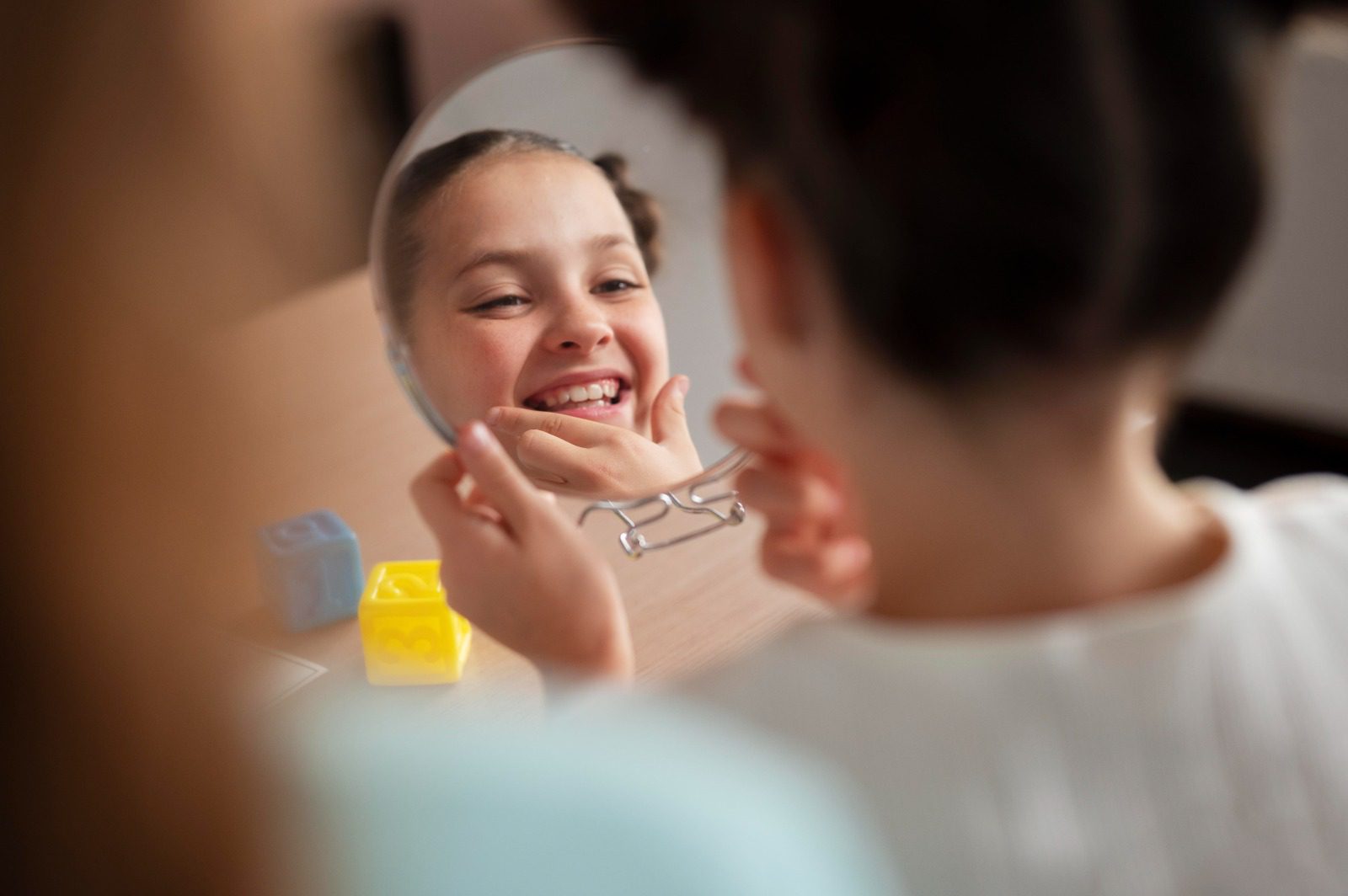
This therapy approach addresses oral-motor based speech difficulties, i.e. when the child is experiencing difficulties with muscle placement and strength, alignment of oral structures and control of precision movements required for speech and feeding. Oral-motor exercises are performed to help strengthen and tone the muscles of the tongue, lips, jaw and cheeks.
The exercises are carried out with the use of therapy tools, like specially designed horns, straws, tongue depressors, biting blocks etc. Oral-motor therapy can also be employed during snack-time using food. Children have a lot of fun during these exercises and in the same time may learn skills essential for appropriate speech production, as well as for eating and drinking.
PROMPT
Prompt’s for Restructuring Oral Muscular Targets is a therapy technique that embodies neuromotor principles, kinesthetic and proprioceptive, auditory and visual information to provide feedback to the speech system. In other words – the therapist gives input to the structures by using touch, appropriate pressure, specific placements and auditory-visual feedback to help the client organize and control the movements for speech.
The Speech Therapist provides sensory-motor cues to signal placement, movements manner, voicing and duration, as well as tension of phonemes, syllables, words, and eventually phrases and sentences.

HANEN
It Takes Two To Talk (ITTT)
It Takes Two To Talk (ITTT) is a family-focused early intervention method which teaches parents how to help children with language delays. As it is the parents who best know their child and spend the most time with their child, their involvement and support plays crucial role in the child’s speech and communication development.
A Hanen certified Speech Therapist leads group of parents through the program, which is a combination of consultations, group discussions, individual feedback sessions and videotaping parents while they interact with their child.
During the ITTT program parents learn how to support their child’s communication development and encourage language learning.
More Than Words
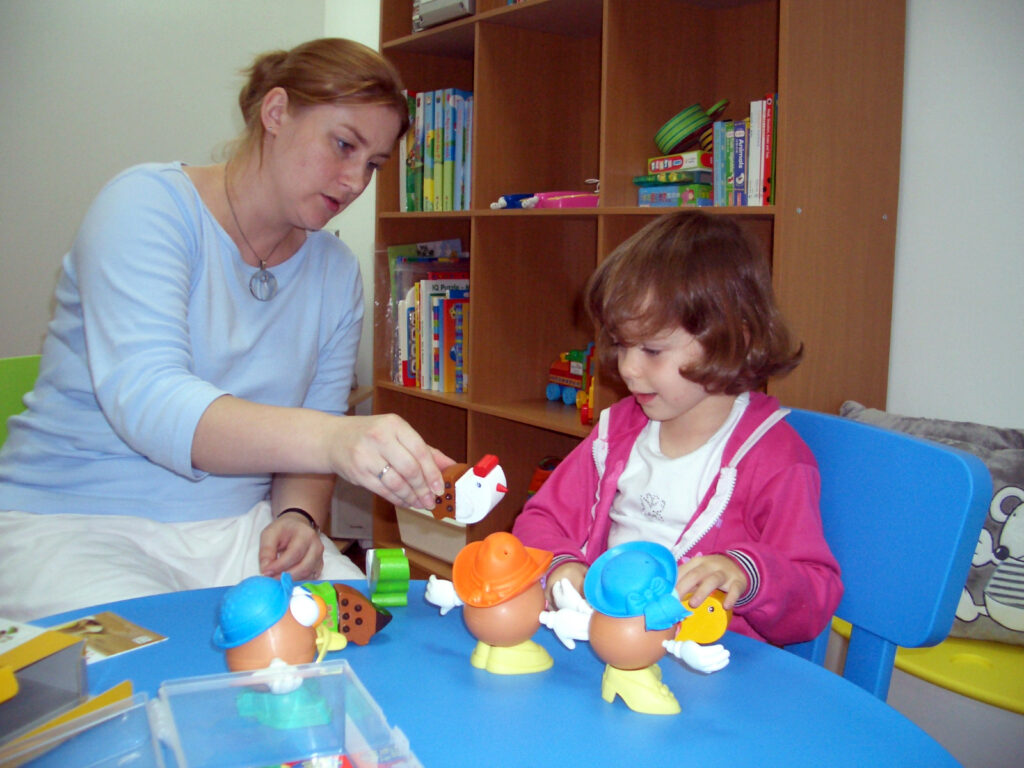
More Than Words is a family-focused program that gives parents of children with Autism Spectrum Disorder (ASD) and related social communication difficulties, practical tools to help their children communicate.
More Than Words derives its theoretical basis from the same social interactionist perspective as It Takes Two to Talk, Hanen’s program for parents of pre-school children with language delays.
Like this program, More Than Words emphasizes the child’s everyday activities as the context for learning to communicate. In addition, More Than Words incorporates current best practice guidelines, highlighting the importance of affect, predictability, structure and the use of visual supports to enhance learning in children with ASD. The Program is organized around four major goals:
- Improved two-way interaction
- More mature and conventional ways of communicating
- Better skills in communicating for social purposes
- An improved understanding of language

TalkAbility
TalkAbility is a program for parents of VERBAL children with autism, PPD-NOS or Asperger’s diagnosis. It is based on the same principles as other Hanen® programs, especially the one that parents or main caregivers are crucial in child’s language and social skills acquisition.
TalkAbility aims at helping those children who have difficulties with appreciating another person’s point of view (poor theory of mind), don’t take other person’s feelings into consideration, have problems making friends or experience other difficulties with social abilities.
Through a combination of group sessions and individual consultation using videotaping and feedback, TalkAbility helps parents learn how to create opportunities, as well as to take advantage of everyday conversations and activities to promote their child’s communication skills, theory of mind development and peer interaction.
THE LIDCOMBE PROGRAM
The Lidcombe Program is an evidence-based approach for young children who stutter. It focuses on parent training and is delivered in two stages. The first stage involves weekly visits to a speech therapist, during which the therapist coaches parents on specific techniques, observes their use, and provides guidance and feedback to support effective practice at home.
The treatment involves the parent commenting directly on the child’s speech. In addition, the feedback is mostly positive as it is mainly given when the child speaks fluently and only ocassionally when the child stutters.
The parent is also trained in measuring fluency on a scale of 1-10. This assists the speech therapist in tracking progress in places other than the clinic to ensure that the child is generalising the skills that they have learnt.
The child is moved onto the second stage once the stuttering disappears or is at a very low level. This stage is called the maintenance stage as it ensure the maintenance of a low level of stuttering for at least one year. The program aims to be a positive experience for the family. As all families are different, the speech therapist will bear this in mind when planning therapy, to ensure inclusion of all essential aspects of the Lidcombe Program, but adjusted to suit the each family’s needs.

PECS
PECS (Picture Exchange Communication System) is a method which uses picture symbols to facilitate communication. The system has been first developed for children with autism and is now successfully used also with individuals who have variety of communicative, physical and cognitive difficulties. It is not a programme designed to teach speech but to communicate. Verbal communication is here encouraged indirectly and some children begin to use speech spontaneously while enrolled in the PECS programme.
PECS emphasizes the importance of an individual with a communication deficit learning to approach a communicative partner. From the start communication is indicated by the child, who is encouraged to independently seek out communication partners in naturally occurring settings. People using PECS are taught to approach and give a picture of a desired item to a communicative partner in exchange for that item.
While advancing through the phases of PECS, the student learns to sequence words to create sentences. PECS has many communicative purposes: it teaches interaction, it is not restricted to one setting, it facilitates rather than inhibits speech, with the end result that communication becomes meaningful and highly motivating.
You may read more on:
- http://www.icdl.com – The Interdisciplinary Council on Developmental and Learning Disorders
- http://www.profectum.org – Profectum.
DIR®/Floortime
The Developmental, Individual Difference, Relationship-based (DIR®/Floortime) model is a special intervention approach tailored to the needs and challenges of children with Autism Spectrum Disorder (ASD) and other developmental difficulties. It is an unique technique that does not focus on curriculum or on teaching isolated, required behaviors, but stimulates general child’s growth in a natural way, based on six stages of typical emotional development identified by Dr. Stanley Greenspan.
Floortime intervention aims to both follow the child’s natural emotional interest and at the same time stimulate the child towards improved social, emotional, and intellectual abilities.
This includes helping children to develop capacities to attend and remain calm and regulated (i. e., comprehend sensations such as sound, movement and touch), engage and appropriately relate to others, initiate and respond to communication, as well as learn to problem – solve and engage in social intercourses.
Therapeutic goals are achieved through playful interactions with parents, caregivers, educators, therapists, peers, siblings, and others who tailor their affect based responses to the child’s individual differences and developmental capacities. It enables best possible progress through meaningful, spontaneous, warm, play-based approach. In DIR®/Floortime model, parents and other family members are involved in the therapeutic intervention because of the importance of their emotional relationships with the child.
M.O.R.E.
Motor Oral Respiration Eyes
M.O.R.E. (Motor Oral Respiration Eyes) Is a therapy model that focuses on the relationships between oral motor mechanisms and the sensorimotor and behavioral aspect of human function.
The approach brings together knowledge about oral, motor, respiratory functions and understanding of sensory processing difficulties that children may experience to conclusion that many aspects of child’s development are influenced by oral functions, such as suck-swallow-breathe synchrony.
M.O.R.E. method guides the therapist in integration of the mouth with sensory and postural functions to improve child’s sensory processing, self-regulation, postural control, motor, language and social development through use of oral motor activities.
Speech therapy also includes articulation, speech fluency (stuttering management), voice treatment, language (phonology, morphology, syntax, semantics, pragmatics) remediation, as well as social skills training and teaching of non-verbal communication skills, such as facial expressions and gestures.


