BubbleBee Turns 20: The Speech Therapy Questions Parents Always Ask Me
BubbleBee turns 20 this year. Some of the children I saw when I opened it in 2006 are adults now. Their parents walked in with the same worry parents bring me today: is my child going to be okay? In all that time, the speech therapy questions parents ask me have hardly changed, so here are the ones I hear most, and how I answer them.
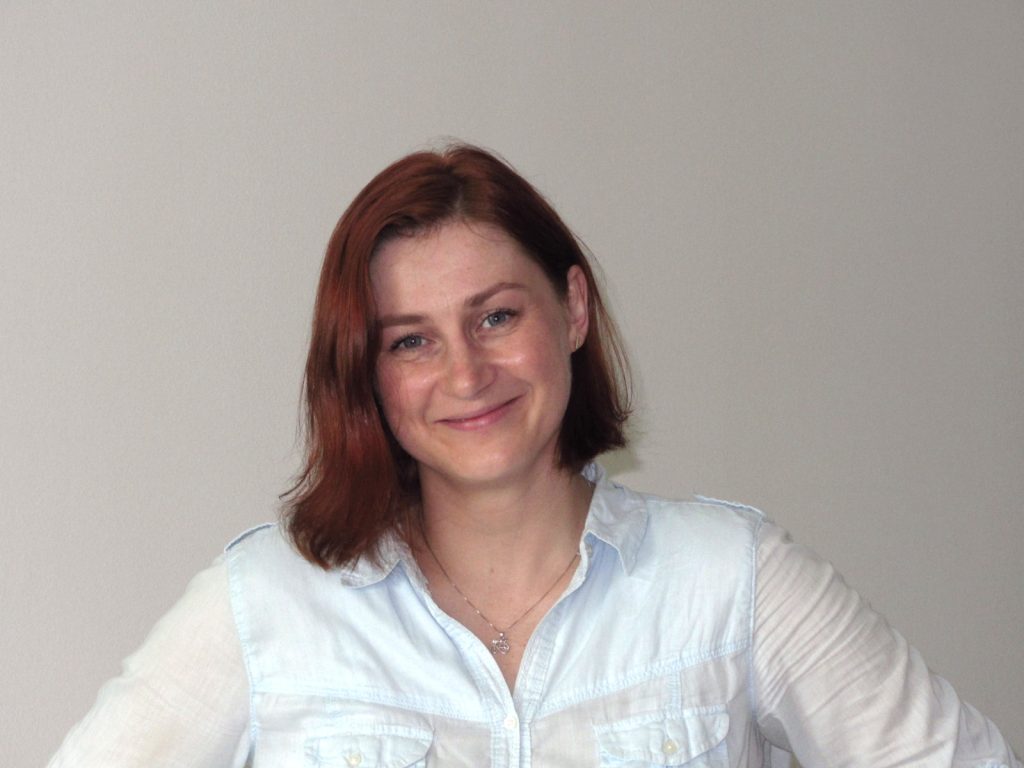
I’m Agnieszka “Agnes” Debowska, M.A. Speech-Language Therapy (University of Gdansk), SALTS, ASHA International Affiliate. I was already working as a speech therapist before I opened BubbleBee, in a busy private practice with lots of clients and plenty of appointments, and everything felt rushed. Parents there told me what they missed: the personal touch, and a plan that was really about their child.
So I started BubbleBee to feel less like a business and more like a close relationship with each family. It was a relief. I could run my sessions the way I wanted, give parents all the materials they needed straight away, and choose the training that shaped how I work.
Before the questions: what a paediatric speech therapist actually does
A paediatric speech therapist works on much more than speech. Depending on the child, that can mean ideation and praxis (coming up with an idea and planning how to carry it out), play, nonverbal communication, speech, language, fluency and social skills.
The first step is always to assess what your child can already do, and then decide what to work on first. For many young children that means the foundations: can she stay calm and settled, does she want to be with you, can the two of you look at the same thing together? Therapists call these regulation, engagement and joint attention.
After the assessment comes a plan for that particular child, and coaching for you so the work carries on at home. For the full picture, we have written up what speech therapy for children involves and an overview of paediatric speech therapy in Singapore.
Is it too early to bring her in? Am I overreacting?
You are not overreacting, and it is almost never too early. If your child has a known genetic condition, or you are already noticing things, the earlier the better. The youngest child I have seen was two months old.
Coming in does not commit you to anything. What you get is a clear starting point, which nobody can go back and create later.
Honestly, nobody, including me, can look at a quiet two-year-old and tell you which way she will go. ASHA’s research review says the same thing in plainer terms: you only find out whether a child was a late talker who caught up, or a child who needed support, by looking back once she is older.
The same question comes from parents of older children: “Is four too late?” or “Is seven too old?” Neither is. Age changes how we work, not whether the work is worth doing.
If you are still wondering whether there is anything to bring in at all, the signs worth paying attention to have their own page.
What if the assessment shows something is wrong?
I am on your side, and that does not change when the news is hard. Sometimes an assessment shows low scores, the possibility of a disability, or a need for more than one kind of therapy, and I will tell you honestly what it is.
I am not using scare tactics. Therapists have to compare a child against developmental norms, and sometimes that means putting a score on what she can do.
The good news is that the score is not where we start. We look at what your child can do and build from there, and there are real strategies to support her development. There is hope, even when for some children it means a long, long process.
Is it because we speak two languages at home?
No. Your languages did not cause this, and dropping one will not undo it.
I hear this from nearly every bilingual family I see, and it usually comes with guilt attached. Someone at a family dinner said the child is confused. A teacher at childcare suggested English only at home. Ah ma has stopped speaking dialect to her because someone told her it was making things worse.
What I want to know is different. Who speaks which language with her at home, how much time she spends with each person, and what she does when she wants something she can’t reach.
The evidence has its own page: what the research says about bilingual households.
Did I do something to cause this?
No. And I say that knowing you probably won’t believe me the first time.
The honest position in the research is that nobody knows. ASHA’s clinical summary of late language emergence states that “the causes of late language emergence (LLE) in otherwise healthy children are not known.”
Parents almost always arrive with a reason ready. Too much screen time. Going back to work after maternity leave. A helper who doesn’t talk much. A second baby. I have heard all of them, and not one is a cause I can point to.
What the same summary does list on the helpful side is ordinary: reading and sharing books with your child every day, and giving her chances to play. Both are still open to you.
How long is this going to take?
Along with “how many sessions will she need?”, this is the question I hear most, and I can’t answer it at the first visit. I’d be cautious of any number given that early.
What I can do is set a review point. We agree on what we are working on, run a block of sessions, then sit down together and look at what has changed. If nothing has changed, that tells us something too, and the plan changes.
Some things affect the timeline. A child who already enjoys being with people usually moves faster than one who is still working hard just to stay settled in a room with someone new. And what happens at home every day matters more than how many sessions you book.
Why is she just playing? When do you start on the words?
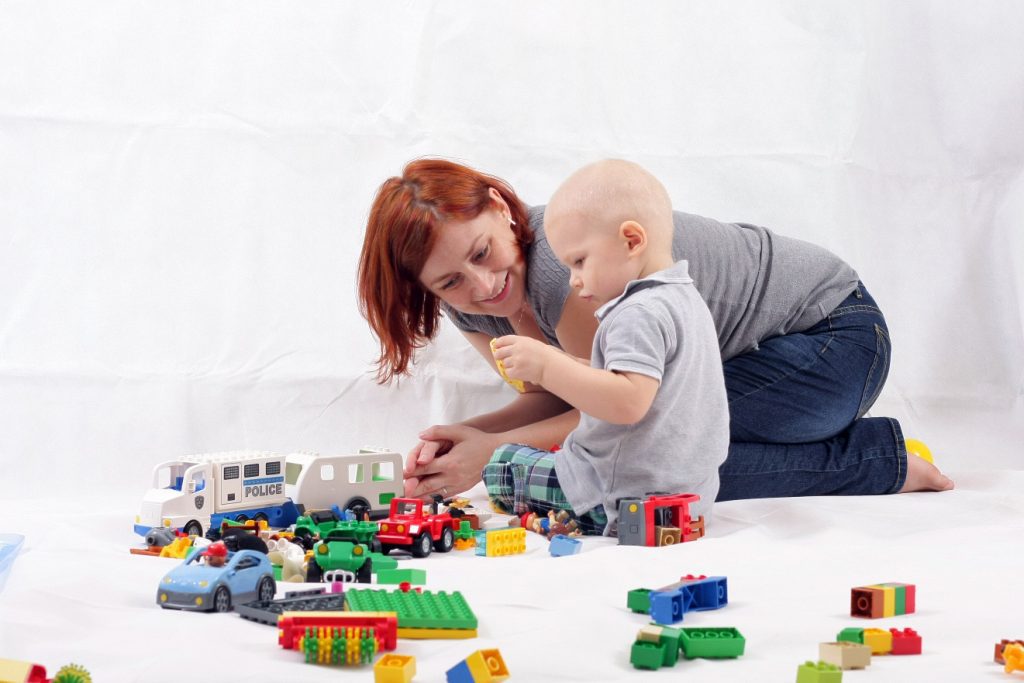
We started on words the moment she picked up the toy. Play is where a child produces her best language, because she chose the activity and she wants something to happen.
I still remember a nonverbal boy who always had a box of toys in our sessions. One day I took the box away before he arrived. He looked around the room and asked, “Where is the box?”
He wanted something, so the words came. That boy had a serious neurological condition, and he went on to attend a mainstream school and do really well in some subjects.
Random drills without context will not help much. It is play, inside a real back-and-forth that means something to her, that builds the skills.
For what a session actually looks like, what actually happens in a session covers it.
What am I supposed to do at home between sessions?
Less than you think, and none of it looks like homework. The most useful thing you can do is slow down and let her go first.
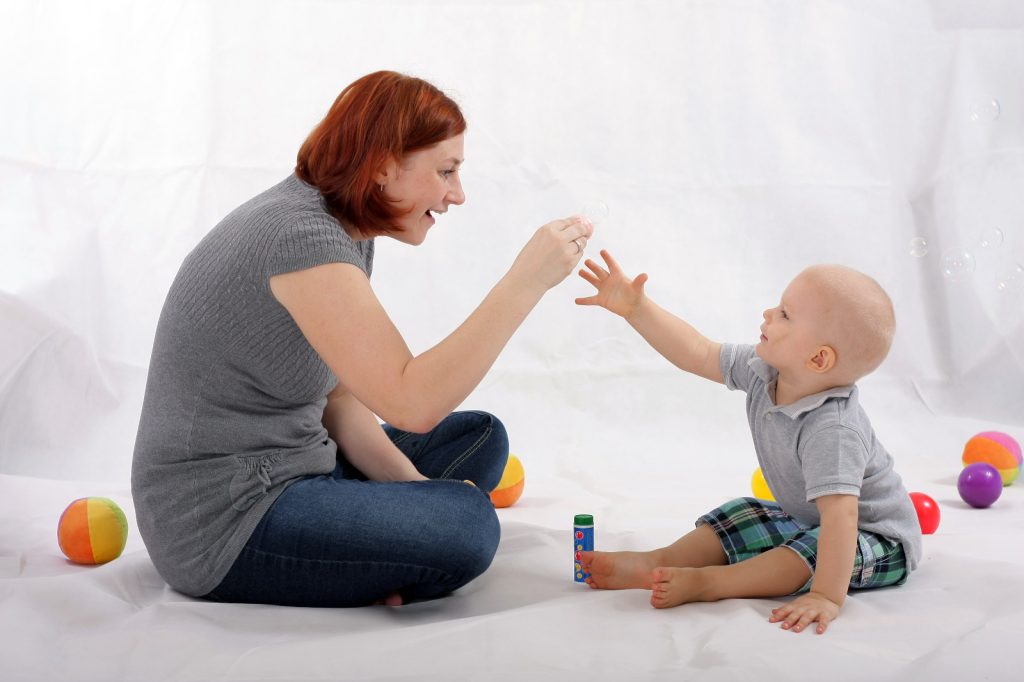
The Hanen Centre calls it OWL: observe, wait and listen. Get down to her level, say nothing, and wait up to ten seconds for her to start something. When she does, respond to that. She pushes the bubble bottle towards you; you say “open” and open it.
Children also pick up far more from everyday talk than we realise. A six-year-old once greeted me with, “So, how are you, young lady?” He had heard the adults around him say it, and tried it out on a not-so-young therapist.
It made me laugh, and it is also language learning at its most natural. What your child hears from you every day is where her language comes from.
Can grandma or her brother come in too?
Yes, please. My work is built on DIR/Floortime and Hanen, which are both relationship-based, so families are always welcome inside the therapy room.
Siblings are often wonderful in sessions. They learn strategies to support their brother or sister, and they show me how they already connect with them. Children have great intuition for connection, and I learn heaps from them.
Knowing your child’s daily routine, and how the family is coping, is at the centre of therapy. We figure out solutions together. Over time we share where you went on holiday and what you did at the weekend, and it often starts to feel like friendship.
Everyone tells me to wait and see. Should I?
They may well be right, and that is what makes the advice so hard to act on. Between 50% and 70% of children who start talking late do catch up with their peers by late preschool or the early school years, according to ASHA’s review of the research.
Your mother-in-law has watched more children grow up than you have. When she says your husband said nothing until four and turned out fine, she is telling the truth. Your PD may have said the same at the last check-up.
The problem is that you only find out which group your child was in afterwards. Waiting is a decision too, and it is one made without information.
So don’t argue about it. Try this instead: “We are not starting therapy. Someone is going to look at her once and tell us whether there is anything to work on.” That is an accurate description of an assessment, and it is much harder for anyone to object to.
When will my child be like the other children?
I can’t give you a date, and twenty years of BubbleBee have taught me why: the starting point does not decide the rest of the story.
Some of the children I saw in the early days went on to university. One is now a pilot. Another finished at the top of his class in secondary school, and when I first met him he could only communicate in scripted, memorised phrases.
One girl found her passion in dance and now performs for Singapore. I can’t describe the feeling when she sent me a Facebook friend request.
Other stories are harder. Some of my former clients live at home with their parents, because their disability is a lifelong challenge, and some really struggle.
It is really variable. So to the parent who feels overwhelmed right now, I would say: keep believing.
How will I know it is actually working?
You will see it in the back-and-forth long before you hear it in her speech. I don’t count words, and I don’t ask parents to keep any kind of record.
The moments I treasure are often small. A child who used to be dysregulated sits down and interacts with you, calm and connected. A nonverbal child starts to use gestures to tell you what she wants.
A child who could only explore toys through sensory play starts to have pretend ideas. I could go on and on.
Then there is repair. When you don’t understand her and she tries again a different way, points, pulls you over, or changes the word, she is showing me she knows communication takes two people.
What has changed in BubbleBee’s 20 years, and what hasn’t
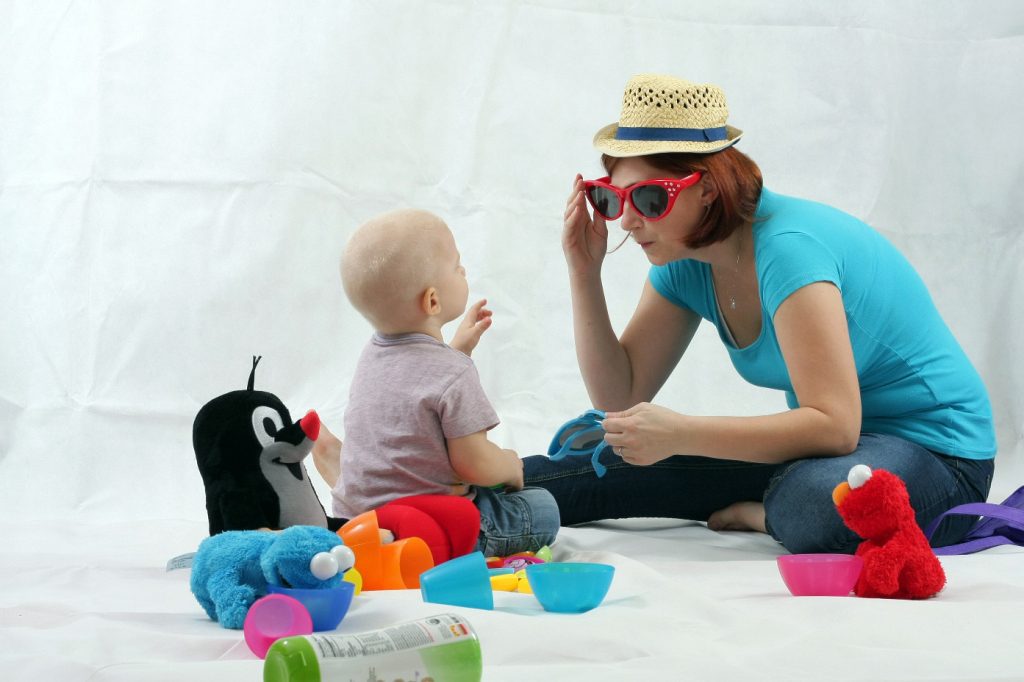
The bottom line has not changed at all. Parents still ask me: is my child going to be okay, how can I help, and what can you do to support our family?
What has changed is mostly good. More parents have access to services, many arrive already aware of strategies and methods, and they want to take part in sessions, not just watch. I also see many more fathers bringing their children to therapy.
That matters. ASHA puts it plainly: “a key component to successful intervention with toddlers is working closely with families.”
Life has also become more complicated. Social media, AI, the haze, COVID and changes in how people interact all affect daily life, and they add extra challenges for children who find speech, language or social communication hard.
It doesn’t happen often enough, but some families still keep in touch after all these years. When they do, I know I have done my job well.
If one of these was your question
Then ask me directly. A first conversation doesn’t have to become an assessment, and an assessment doesn’t have to become therapy.
Message me on WhatsApp @ +65 9721 0336, Tuesday to Saturday, 9am to 6pm. Or read the overview of paediatric speech therapy in Singapore first if you prefer.
Frequently Asked Questions
Sessions are one hour. How often depends on what we are working on and what is realistic for your family. Coming regularly at a pace you can keep up is better than a month of intensive sessions and then stopping. We decide this together after the assessment.
Yes, tell me. A gap that big between home and school says something useful about how she copes with demands, unfamiliar adults or noise. Bring what her teacher said, in the teacher’s own words if you can.
That is expected, and it is useful information. A first session is often me sitting on the floor doing very little while she decides whether I am safe. A child who refuses to perform on demand is usually showing me exactly where to start.
It can flatten out, and often does around illness, a new sibling, a change of school or a growth spurt somewhere else. A plateau is not a verdict on the plan. If it goes on for more than a few weeks, I would change the plan.